

Quick answer: An escape room birthday party at home works best when you pick a printable kit made for the youngest guest, hide its envelopes in one or two rooms and make the game the middle of a 90-minute party, with arrival before it and cake and certificates after. For ages 5 to 9 choose a 45-minute picture-based kit; for ages 8 to 12 choose a 60-minute kit with codes and logic. Every kit plays solo or with a group of any size.
A scenario: Maya is turning seven and has asked for "a dinosaur party where we have to solve things." Her friends arrive, get a paper explorer badge at the door and hear that a baby dinosaur has gone missing somewhere in the house. For the next forty minutes the living room is loud with counting, arguing about shadows and racing to the bookshelf for envelope number four. When the last clue points to the laundry basket, Maya pulls out the final picture and the whole group cheers as if they had found a real egg.
Key takeaways
- Choose the kit for your youngest guest. A game that is too hard ends a party mood faster than one that is a little easy.
- Invite as many children as you like: every kit plays solo or with a group of any size.
- Build the party around the game: about 15 minutes of arrival, 45 to 60 minutes of play, then cake and prizes.
- Hide envelopes at kid height in safe places, and keep the answer key in your pocket.
- Help stuck kids with questions, not answers, and give every child a certificate.
Why an escape room birthday party works for kids
An escape room birthday party works because every child plays on the same side. Nobody is out after the first round, and the shy guest who spots the matching shadow gets the same cheer as the loudest one. The story gives the afternoon a clear beginning and end, so the hour never drifts into chaos.
It also fits an ordinary home: a table, a few hiding places, scissors, envelopes and a printer. For the general mechanics of printed kits, see our guide to an escape room at home; this post is about turning one into a birthday.
Choosing a kit by age and group size
Choose by the age of the youngest child who will play. Our kids' and family kits play solo or with a group of any size, so the guest list never limits your choice.
Ages 5 to 7: pictures, counting and cutting
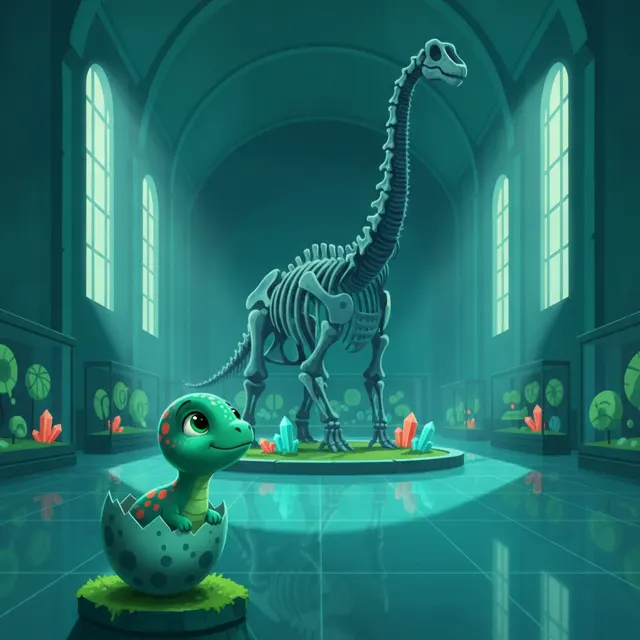
Children who are still learning to read need a kids escape room at home built on visual puzzles. Our printable escape rooms for kids (ages 5 to 9, about 45 minutes) ask children to sort, match, count and color while you read the story out loud. Pick by theme: Dino Museum Rescue is a hunt for a lost baby dinosaur, Pirate Island Treasure ends at a treasure chest, Robot Space Station adds simple coding ideas and Toy Workshop Rescue is the Christmas one. All four need a color printer.
Ages 8 to 12: codes, logic and a longer game
From about eight, children enjoy real codes, number puzzles and more reading, so a family kit for ages 8 and up fits better. The Candy Factory Mix-Up runs about 60 minutes and has no holiday in its story, so it suits a birthday in any month. For October, The Ghost of Hollow House is spooky but friendly and includes a hunt through your own rooms. The Lost North Pole Post suits December but needs confident readers. If most guests are already twelve, our teen kits for ages 12 and up are another option.
Group size: when to split into teams
You do not have to split at all, because every kit plays solo or with a group of any size. With a big group, the real job is making sure nobody ends up standing at the back: give each child a task, such as reading a clue aloud, cutting out a piece or opening the next envelope, and keep an adult close to the action.
| Kit | Ages | Time | Puzzle style | Birthday fit |
|---|---|---|---|---|
| Dino Museum Rescue | 5 to 9 | About 45 min | Size order, cut-out skeleton, shadows | Dinosaur party |
| Pirate Island Treasure | 5 to 9 | About 45 min | Signal flags, coins to count, maze | Pirate or summer party |
| Robot Space Station | 5 to 9 | About 45 min | Arrow commands, color code, keypad | Space party |
| Toy Workshop Rescue | 5 to 9 | About 45 min | Color by number, shape code, strings | December, youngest guests |
| The Candy Factory Mix-Up | 8+ | About 60 min | Patterns, Venn diagram, word ladder | Any time of year |
| The Ghost of Hollow House | 8+ | 45 to 60 min | Potion recipe, maze, house hunt | Halloween birthday |
| The Lost North Pole Post | 8+ | About 60 min | Morse code, sums, anagram | December, confident readers |
Invitations and theme
Use the invitation to start the story before anyone arrives. Our kids' and family kits include printable invitations, so you can send a "mission" instead of a plain card. Add what parents need: start time, pickup time and a note that the kids will be moving around the house.
Keep the theme light. One prop per child is enough: an explorer badge, a pirate bandana or a strip of tape that says "Agent." Decorate the table where the first envelope waits rather than the whole home.
Room setup and hiding envelopes
Set up the day before, because printing and cutting always take longer than planned. Print single-sided, cut out the marked pieces, put each puzzle in its numbered envelope and read the host guide once.
- Pick one or two rooms. Close off bedrooms and anything fragile so the search has a clear boundary.
- Hide at kid height. Under a cushion, inside a cereal box, taped under a chair. For five-year-olds, leave a corner of each envelope visible.
- Stay away from danger. No ovens, stairs, high shelves, plugs or the cake.
- Write a hiding list. Keep it with the answer key in your pocket.
- Stock a base table. Scissors, glue, crayons and pencils for everyone, so nobody waits for the one pen.
A sample 90-minute party timeline
A 90-minute party gives you 15 minutes of arrival, about 45 minutes of play and half an hour for cake and prizes. Here is a plan for a 45-minute kids' kit:
- 0:00 to 0:15, arrival. Props at the door and a coloring sheet at the table while late guests trickle in.
- 0:15 to 0:20, briefing. Read the opening story in a dramatic voice, give three rules (search only open rooms, open envelopes in order, everyone gets a turn) and start the clock.
- 0:20 to 1:05, the game. Puzzles, hunting and the final envelope.
- 1:05 to 1:25, cake. Candles and singing while the excitement is still high.
- 1:25 to 1:30, certificates. Hand them out, take the team photo, wave goodbye.
With a 60-minute kit for older kids, stretch the party to about 1 hour 45 minutes or serve cake before the game.
Helping stuck kids without giving answers
Help stuck kids with a question that points toward the clue, not with the answer. Wait through about two minutes of real silence, then go from vague to specific:
- "What do you see on this page?" Saying it aloud often solves it.
- "Which piece haven't you used yet?"
- "Look again at the colors on the top row."
- Still stuck? Use the hints that come with the kit.
Pass the page to a child who has not had a turn yet; fresh eyes help, and it stops one fast reader from solving everything. If a group is truly frustrated, let them "find" the next envelope. Nobody remembers a skipped puzzle, but everyone remembers a party that went sour.
Mixed ages and siblings
With mixed ages, choose the kit for the youngest child and give older ones a role. A ten-year-old sibling makes a great assistant game master who reads the story or guards the hiding list. Inside the team, one rule keeps it fair: big kids explain, little kids do. The older child may point, but the younger one cuts, counts and opens the envelope.
Hand out jobs such as map keeper, envelope guard and scissor captain, and rotate them after each puzzle. For play that bridges wider age gaps, see our list of family detective games for all ages.
Prizes and certificates
Give every child the same small prize, because the team won together. Our kids' and family kits end with a certificate, so write each guest's name on one before the party. Let the birthday child open the final envelope; it is a special moment that costs nobody else anything.
Simple prizes work best: stickers, a small magnifying glass or a themed pencil, plus a group photo with the final clue.
Cleanup as the last mission
Make cleanup the final task: the team has five minutes to bring back every envelope and paper scrap. Check your hiding list so nothing stays under the sofa, and count the scissors. If early finishers need a calm extra, the clue hunts in our guide to detective games for kids use things you already have at home.
FAQ
What age is an escape room birthday party good for?
An escape room birthday party works from about age 5 if the kit is made for that age. Ages 5 to 7 need picture puzzles and an adult reading aloud, while 8 to 12-year-olds can handle codes, logic and a 60-minute game.
How many kids can play one printable escape room?
Any number. Our kids' and family kits play solo or with a group of any size, so the whole party can solve one kit together, with an adult nearby to read the story aloud.
How long should a kids' escape room party be?
Plan about 90 minutes for a party built around a 45-minute game, which leaves room for arrival, cake and certificates. With a 60-minute kit, allow around 1 hour 45 minutes.
Does a kids' escape room need real locks?
No. A printable escape room for kids uses numbered envelopes instead of locks, and each answer tells the children which envelope comes next.
Can I print the kids' kits in black and white?
No. Our kits for ages 5 to 9 are color only, because the puzzles use color. Some family kits, such as The Ghost of Hollow House, also come in a printer-friendly edition, and each product page says which.